
Quick answer
What board should an intermediate surfer ride?
- Who this is forYou catch unbroken waves consistently, link basic turns, and want more drive from your board — typically 1–3 years in.
- Board typesFish, hybrid, midlength, or performance funboard — not a full high-performance shortboard until your duck dive and wave count are solid.
- VolumeRoughly 0.4–0.5 × your weight in kg (e.g. 75 kg → 30–38 L as a starting range). Add volume for weak waves or less frequent sessions.
- Best next stepMatch board type to your local break — a shaper who surfs there beats a generic thruster off the rack.
Between levels? Take the skill assessment or see the advanced guide if you are already surfing overhead with control.
Path
Four steps to your step-down board
Skills and volume before brand names.
You trim the open face and can bottom turn — not just ride straight to the beach.
Take skill assessmentFish for small mush, hybrid for all-round, midlength if you want paddle power with more manoeuvre.
Drop 10–15 L from your funboard in one step — not 30 L. You still need wave count.
Tell a shaper what you surf now, what breaks you ride, and which manoeuvres you are working on.
Browse local shapersTechnique
Skills to match your new board
A smaller board rewards speed generation, cutbacks, and positioning. Work these before you chase less volume:
Sizing
What length and volume for intermediate surfers?
Use your weight as a floor, then pick length and template from the waves you surf weekly. These ranges are typical for fish and hybrid step-downs — midlengths sit at the upper end.
| Your weight | Length | Volume | Common types |
|---|---|---|---|
| 55–70 kg | 6'0" – 6'8" | 28–35 L | Fish, hybrid |
| 70–85 kg | 6'2" – 7'0" | 32–40 L | Hybrid, fish, midlength |
| 85–95 kg | 6'6" – 7'2" | 36–45 L | Hybrid, midlength |
| 95 kg+ | 6'8" – 7'6" | 40–48 L | Midlength, wide hybrid |
Shapes
Fish, hybrid, or midlength?
Best for: Small to medium, softer waves
- Wide, flat — easy speed
- Twin or quad fins
- Great first step-down from a funboard
Best for: Your daily break, mixed conditions
- Balance of paddle and turn
- Often 6'6"–7'2"
- Most versatile intermediate shape
Best for: Point breaks, mellow faces, high wave count
- More paddle than a fish
- Smoother turns, less twitchy
- Good if you surf less than weekly
Compare board types in depth on the board type guides or filter the catalog.
Local marketplace
Intermediate is the best stage for a custom board
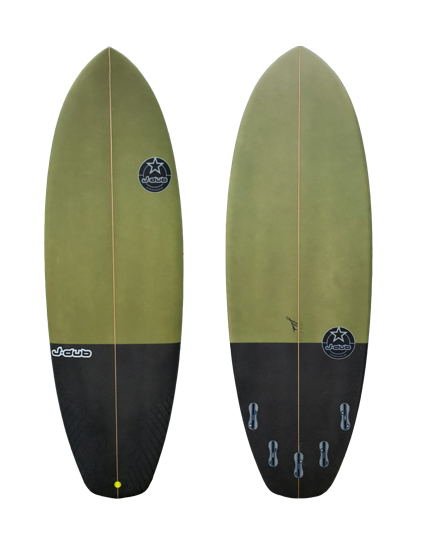
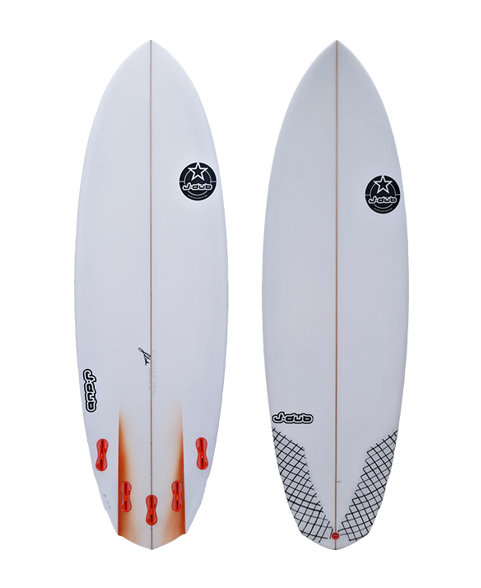
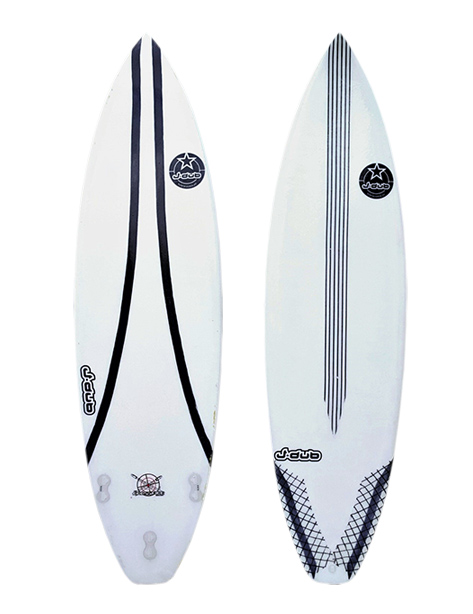
You know what you can do in the water but your quiver is still evolving. A shaper can build a fish, hybrid, or step-down with volume and rocker matched to your break — and explain why a thruster can wait another season.
11 custom boards from local shapers
Catalog
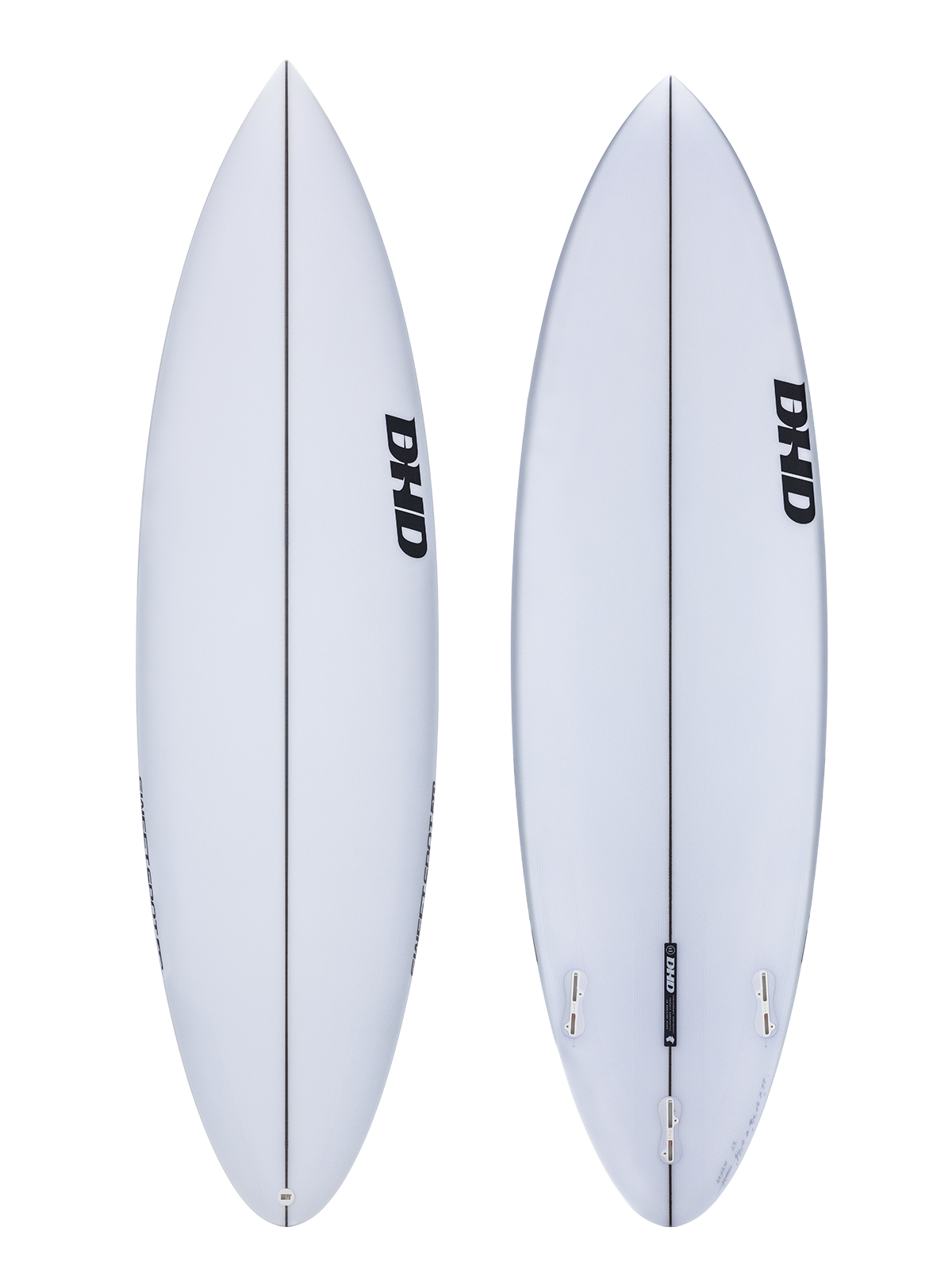
Intermediate boards in our catalog
Compare specs across 300+ boards — filter by fish, hybrid, midlength, and volume.


Coaching
Technique unlocks the board change
A smaller board only helps if you generate speed and finish turns on the open face. A few sessions with an intermediate coach often clarify whether you need less volume or better positioning.
Avoid these
What mistakes do intermediate surfers make?
Should I go straight to a performance shortboard?
Only if you duck dive confidently, catch waves without begging, and link turns on the face. Most intermediates progress through a fish or hybrid first.
Is less volume always better?
No. Too little volume kills wave count and stalls progression. Step down gradually — if you cannot paddle into waves you used to catch, the board is too small.
Can I use the same board in all conditions?
One board can cover a lot, but a fish in overhead surf or a gun in knee-high mush both underperform. Match your main board to the waves you surf most often.
What if I am still on a mini-mal?
That is fine if it matches your wave count and goals. Read the beginner guide if you have not moved to fibreglass yet — there is no prize for stepping down early.
Budget
How much does an intermediate board cost?
Illustrative USD. Custom shaper quotes vary by region and glass schedule.
| Used step-down | New retail | Custom shaper | |
|---|---|---|---|
| Board | $450–700 | $750–1,100 | $850–1,200 |
| Fins | Often included | $80–120 | Matched to design |
| Coach tune-up | — | 1–3 sessions ~$180 | Shaper consult included |
| Rough total | ~$500 | ~$900 | ~$950+ |
Custom beats generic at this stage
Tell a shaper what you ride now and what you want to learn — fish, hybrid, or midlength for your break.
Find local shapersAnswers
Intermediate board frequently asked questions
What volume should an intermediate surfer use?
Start around 0.4–0.5 × your body weight in kg, then adjust for wave type and fitness. Weak beach breaks need more volume; punchy points can carry less.
Fish or hybrid for my first step-down?
Fish if your waves are small and soft. Hybrid if you surf a mix of conditions and want one board to grow with. Talk to a shaper who knows your break.
When should I learn to duck dive?
Before you rely on a board you cannot turtle-roll. Duck diving is essential once you move below ~7' and surf unbroken waves with others in the lineup.
Thruster, twin, or quad?
Thrusters are predictable and hold well — good default. Twins and quads generate speed in smaller surf. Your shaper can recommend fin setup for your template.
How do I know I am ready for the advanced guide?
When you surf overhead comfortably, execute cutbacks and snaps with control, and want a board for critical sections — not just more wave count.
Safety
Before you paddle out on a shorter board
Don't
- Stepping down in volume faster than your paddling fitness
- Surfing crowded peaks beyond your ability to control the board
- Ignoring leash and board control in heavier surf
- Skipping ding repair — lighter boards still waterlog
Do
- Practice duck dives before surfing crowded breaks on a short board
- Match session size to your comfort — intermediate is not overhead day yet for everyone
- Learn lineup etiquette as your board gets more manoeuvrable
- Film a session or book a coach to check technique before buying again
Ready to step down?
Browse the catalog, talk to a shaper, or book a coach session before you buy.